

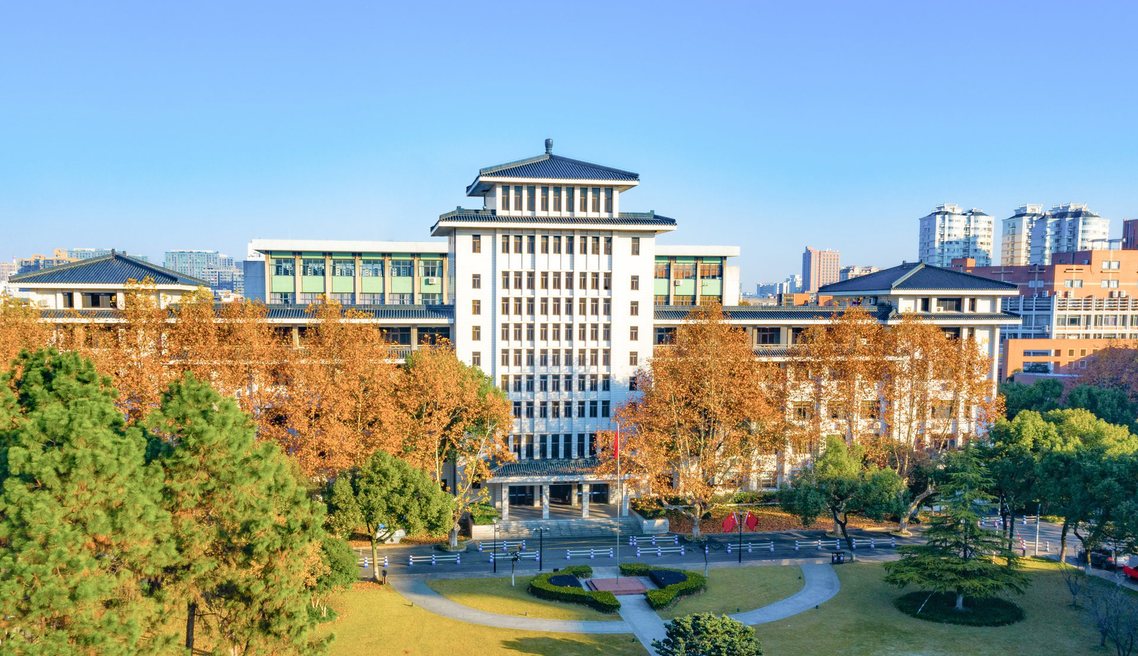
The School of Art and Archaeology at Zhejiang University was established in April 2019. It brings together leading scholars and artists across the fields of art and archaeology and is dedicated to educating creative, broadly grounded, and globally minded talents and future leaders. Committed to excellence in research, teaching, and creative practice, the School aims to be a leading international center for the study of art and archaeology.
History
Zhejiang University has a long and distinguished tradition of education in art and archaeology. Before 1949, the University offered instruction in archaeology within its Department of Anthropology, home to eminent scholars such as Xia Nai and Sha Menghai. It trained a generation of renowned archaeologists and museologists—among them Shi Xingbang, Wang Zhongshu, Huang Shengzhang, and Mao Zhaoxi—and gathered a constellation of masters who hold a pivotal place in the history of modern Chinese art, including Ma Yifu, Shen Yinmo, Feng Zikai, and Lu Weizhao.
1950s Mr. Mao Zhaoxi led the establishment of the University’s Cultural Relics Exhibition Room.
1978 With the support of Mr. Xia Nai, the University became the first in China to petition the Ministry of Education to establish an undergraduate program in Cultural Heritage and Museology.
1981 The University enrolled its first undergraduate cohort in Cultural Heritage and Museology.
1998 The University founded the Department of Art. Administered under the College of Humanities while retaining relative autonomy, it was authorized to present itself externally as the College of Art.
2005 The University established the Research Center for Ancient Chinese Painting and Calligraphy, dedicated principally to the compilation and study of A Comprehensive Collection of Ancient Chinese Paintings (中国历代绘画大系).
2008 The University established the Department of Cultural Heritage and Museology and, in the same year, began preparations for the Museum of Art and Archaeology.
2010 The University founded the Institute of Cultural Heritage.
2019 (April) The School of Art and Archaeology was formally established, bringing together the Department of Art, the Department of Cultural Heritage and Museology, the Institute of Cultural Heritage, the Research Center for Ancient Chinese Painting and Calligraphy, and the Museum of Art and Archaeology.
2019 (September) The Museum of Art and Archaeology opened to the public.
Organization
The School comprises four departments and one museum:
Department of Archaeology and Museology
Department of Art History
Department of Fine Arts
Department of Design
Museum of Art and Archaeology — a National First-Class Museum, located in the Shaw Art Building on the University’s Xixi Campus.
Disciplines and Programs
Undergraduate programs:
Archaeology · Cultural Heritage and Museology · Fine Arts · Art and Technology
Professional master’s programs:
Museology · Fine Arts and Calligraphy
Doctoral programs and postdoctoral research stations (first-level disciplines):
Archaeology · Art · Design (jointly established with the College of Computer Science and Technology)
Faculty and Students
The School has a faculty and staff of more than 160, including nearly 60 full-time teaching faculty, among whom six hold the title of Qiushi Distinguished Professor (as of 31 March 2025).
It enrolls 624 students, comprising 275 undergraduate, 232 master’s, and 117 doctoral students, of whom 23 are international students (as of 31 March 2025).
Undergraduate enrollment by program
Program | Students |
Archaeology | 19 |
Cultural Heritage and Museology | 95 |
Fine Arts | 57 |
Art and Technology | 104 |
Total | 275 |
Master’s enrollment by program
Program | Students |
Archaeology | 23 |
Art | 24 |
Design | 19 |
Fine Arts and Calligraphy | 74 |
Museology | 92 |
Total | 232 |
Doctoral enrollment by program
Program | Students |
Archaeology | 70 |
Art | 47 |
Total | 117 |
Continuing Education
The School’s Center for International Cultural and Arts Exchange runs its non-degree and professional training programs, offering high-end courses in fields such as art connoisseurship, calligraphy, and ceramics restoration. It serves professionals from government, business, and public institutions as well as art enthusiasts, and has built a portfolio of well-regarded flagship programs.
Bridging a heritage that reaches back nearly a century with the ambitions of a new era, the School of Art and Archaeology continues to bring art and archaeology into dialogue—advancing scholarship and creative practice, educating a new generation, and engaging with scholarly communities around the world. Rooted in tradition and open to the world, it welcomes scholars, artists, and students everywhere to join in this enduring inquiry.