

The UNESCO Chair on Silk Roads Heritage at Zhejiang University was formally approved in early 2025, with Professor Zhao Feng, Qiushi Distinguished Professor of Zhejiang University, appointed as Chairholder. In May of the same year, a cooperation agreement was signed between Zhejiang University, represented by President Ma Yanming, and UNESCO, represented by its Director-General, Ms. Audrey Azoulay.
The Chair continues a scholarly tradition that reaches back to UNESCO’s 1988 project “The Silk Roads: Roads of Dialogue,” and forms part of the global UNITWIN/UNESCO Chairs Programme launched in 1992. It is the second UNESCO Chair approved at Zhejiang University, following the Chair on Entrepreneurship Education (2010). Based at the School of Art and Archaeology, it draws together strengths across the humanities, social sciences, and natural sciences to integrate heritage research, education, and international cooperation.
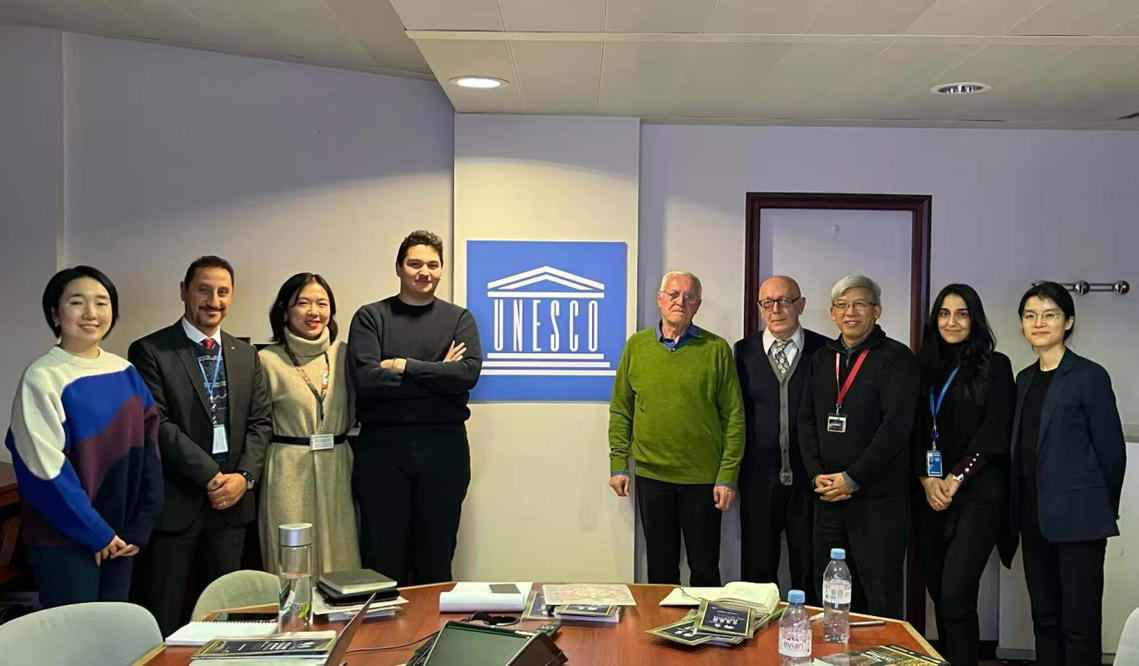
The World Silk Interactive Map launched at UNESCO Headquarters, 12 December 2022.
Mission
The Chair is mandated to safeguard the heritage of the Silk Roads, to preserve both its material legacy and historical memory, and to advance transnational research and cooperation in this field. Rooted in the Silk Roads as a cradle of exchange among human civilizations, its work centers on three areas:
Heritage preservation — systematically documenting and protecting the tangible and intangible cultural heritage of the Silk Roads—including silk, ceramics, architectural remains, and traditional crafts—and bringing out its historical and artistic value.
Cross-cultural dialogue — crossing geographical and disciplinary boundaries to activate a global Silk Roads research network and foster mutual respect among civilizations.
Sustainable transmission — turning research into social impact through talent cultivation, the empowerment of craftspeople, and public participation, so that an ancient heritage takes on new life in contemporary society.
Building on the academic strengths of Zhejiang University, the Chair aims to produce work of international influence, to educate young talents and established experts who are fluent in international practice and active in heritage cooperation, and to contribute to the United Nations Sustainable Development Goals.
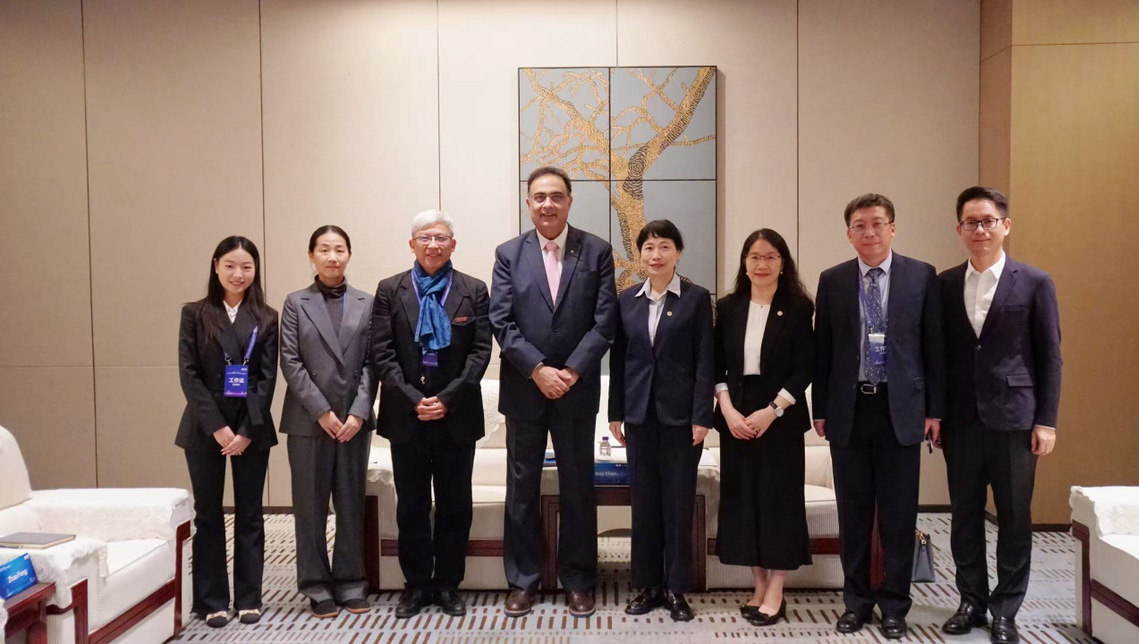
Shahbaz Khan, Director of the UNESCO Beijing Office visited Zhejiang University on Nov 8, 2025.
Members
Zhao Feng — Chairholder. Qiushi Distinguished Professor, School of Art and Archaeology, Zhejiang University; Director of the Silk Art & Silk Roads Research Centre.
Chen Jingxin — Associate Researcher, Institute of Cultural Heritage, Zhejiang University; master’s supervisor.
Fu Yi — Associate Professor, Department of Cultural Heritage and Museology, Zhejiang University; doctoral supervisor; Deputy Head of the Department of Archaeology and Cultural Heritage.
Luo Shuai — Tenured Associate Professor, School of History, Zhejiang University; doctoral supervisor.
Mao Ruohan — Hundred Talents Program Researcher, Zhejiang University; doctoral supervisor, School of Art and Archaeology.
Zhang Yinglan — Professor and doctoral supervisor, School of Art and Archaeology, Zhejiang University; member of the Academic Committee of the Faculty of Humanities and Distinguished Researcher of the Academy of National Institutions.
Research Highlights
Digital Humanities
The Chair continues to develop the World Silk Interactive Map (Jinshow), an open platform that has integrated seven categories of resources—artifacts, images, and more—with over 13,000 records to date, making it a key piece of digital infrastructure for the study of silk cultural heritage worldwide. The Chair also operates the Silk Road Online Museum (SROM), which brings together digital collections from more than 40 museums around the world as an open resource for scholars and the public.
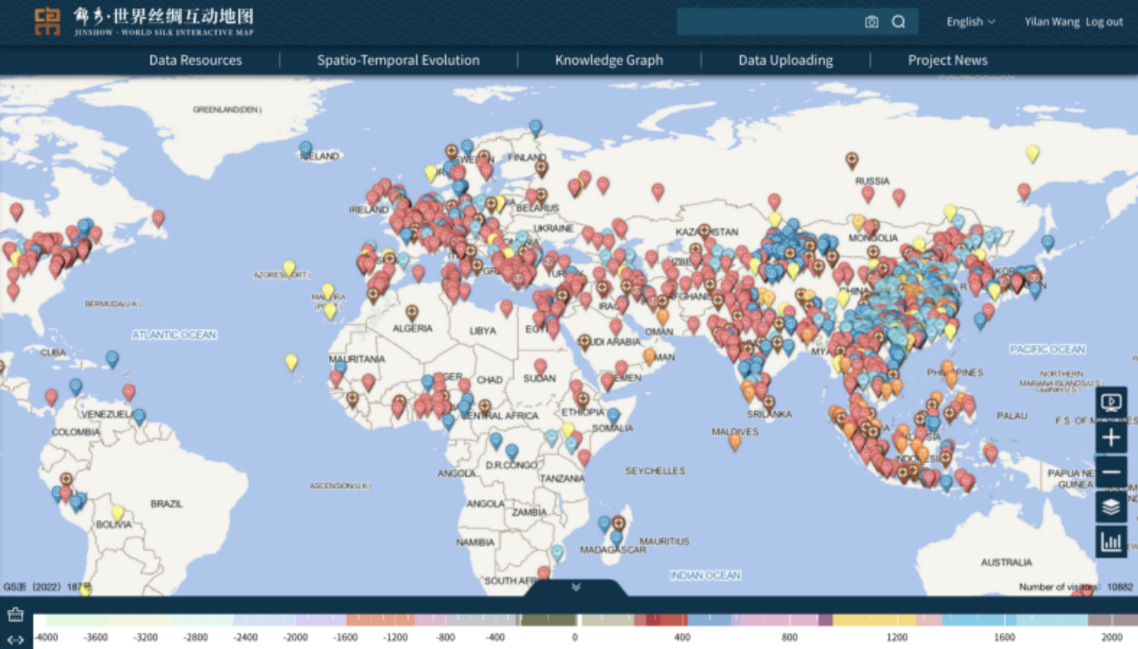
The World Silk Interactive Map (Jinshow).
Academic Publishing
In partnership with Brill, the Chair edits and publishes the Journal of Silk Roads Heritage (JSRH), a peer-reviewed, diamond open-access journal issued as one volume in two issues per year—the first journal dedicated specifically to the relics and crafts of the Silk Roads. The Chair also compiles the bilingual Annual Report on Silk Roads Heritage Studies, a systematic yearly review across five areas: cultural-heritage preservation, intangible cultural heritage, archaeological discoveries, exhibitions, and scholarly publications.
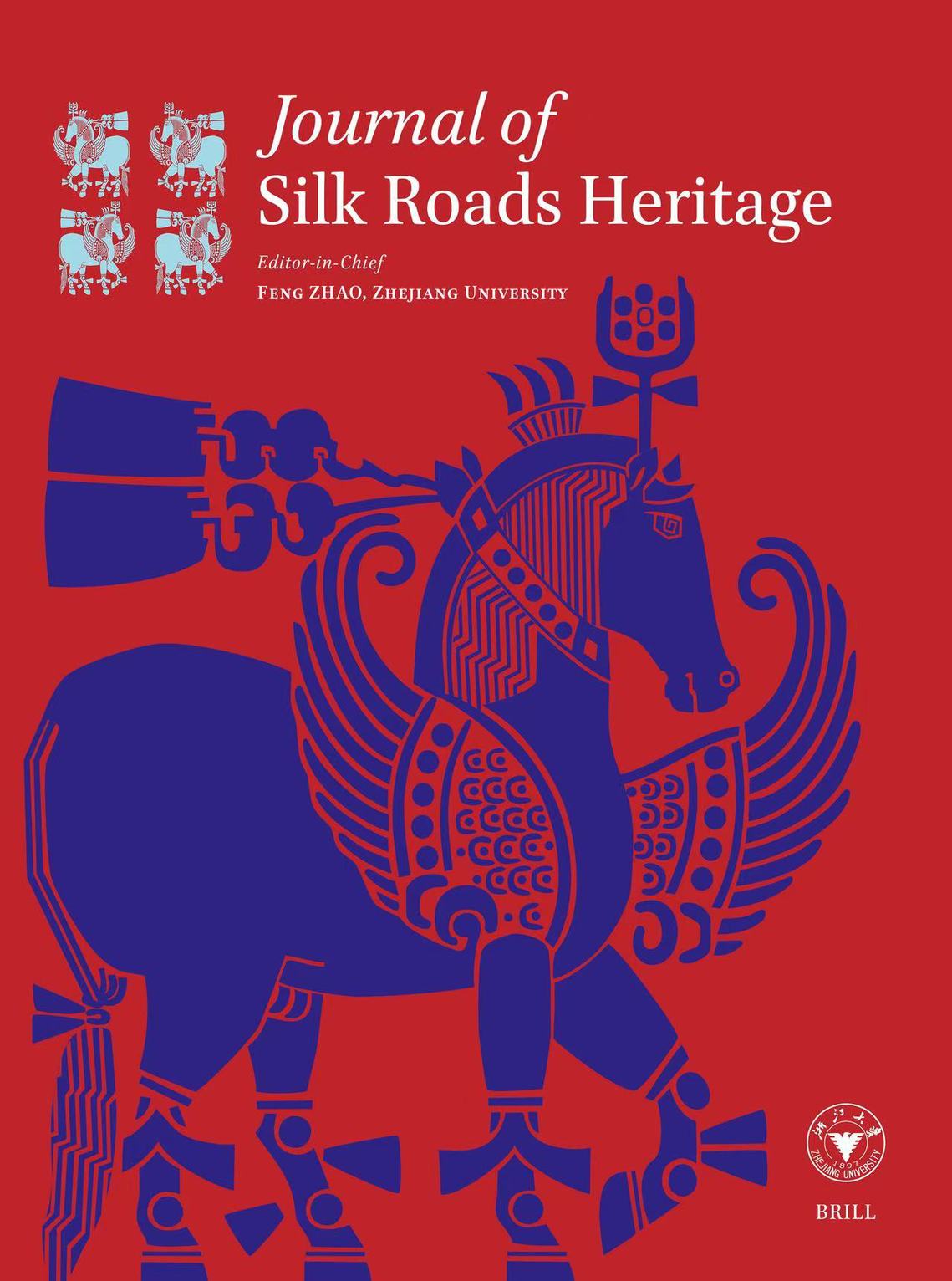
Journal of Silk Roads Heritage (JSRH), Volume 1, published with Brill.
Academic Events
The Chair regularly hosts the Silk Roads Cross-Cultural Lecture Series, inviting leading scholars from China and abroad to speak on the exchange of civilizations, artistic dialogue, and heritage interpretation along the Silk Roads—building an interdisciplinary platform that connects archaeology, art history, and cultural-heritage studies.
Education
The course Intangible Cultural Heritage of Asian Handicrafts is built around the idea of the “full chain of cultural heritage.” Through lectures, visits, fieldwork, internships, and especially curatorial practice, and with experts invited from China and abroad, it helps students understand the definition, core values, and key features of intangible heritage; deepens their knowledge of Asian craft traditions; bridges tangible and intangible heritage; and prepares them, as future custodians of heritage, to take part in cultural transmission.